REVIEW · DENVER
Denver Indoor Skydiving Experience with 2 Flights & Personalized Certificate
Book on Viator →Operated by iFLY Indoor Skydiving · Bookable on Viator
Skip the plane; feel free-fall in Denver. I love the two 60-second solo sessions and the one-on-one certified instructor guidance that helps you nail the right body position fast. One possible drawback: on busy days, your actual flight time can run later than the check-in schedule.
This is a premium vertical wind tunnel setup in Lone Tree where you get smooth, controlled free-fall conditions without jumping out of anything. You’ll go as part of a small group (up to 12), but you fly one at a time with your instructor right there with you. No experience is required, and that matters, because the “how do I do this?” anxiety is the enemy.
The experience is also flexible in a practical way: you pick a start time that works for your day. Health limits apply, so check the restrictions first if you’ve had major injuries or are pregnant, and plan to arrive a bit early so you’re not rushing gear and check-in.
In This Review
- Key Things That Make iFLY Denver Worth Your Time
- Entering The iFLY Wind-Tunnel Facility Near Park Meadows
- How the Vertical Wind Tunnel Creates Free-Fall Conditions
- Gear Up: What You Wear and What to Expect at Check-In
- The Training Session That Makes Your First Flight Click
- Your Two 60-Second Solo Flights: Focus, Timing, and Coaching
- The Optional High Flight Add-On (and When It’s Worth It)
- Safety Rules That Matter (and Why They Exist)
- Price and Value: What $102.96 Buys You in Real Terms
- Making the Most of Your Time: Simple Arrival Tips
- Who Should Book This Denver Wind-Tunnel Flight
- Bottom Line: Should You Book iFLY Denver?
- FAQ
- What is the location for the Denver indoor wind-tunnel flight?
- How long does the experience take?
- Are two flights included?
- Do I need any experience?
- How does the training work?
- Is the experience scary or does it feel like falling?
- What should I wear?
- Are there age limits?
- Is there a weight limit?
- Can friends or family watch without participating?
- Can I reschedule my reservation after booking?
Key Things That Make iFLY Denver Worth Your Time
- Two solo 60-second flights for real practice, not just one sample run
- Training + in-chamber coaching so you’re not guessing your body position
- Vertical wind tunnel free-fall simulation with no jump, no door, no chaos
- Flight certificate of achievement that gives the day a satisfying wrap-up
- Small group sessions (max 12) while you still fly one-on-one
Entering The iFLY Wind-Tunnel Facility Near Park Meadows
iFLY Denver is based at 9230 Park Meadows Dr in Lone Tree, which is convenient if you’re already around the Denver metro. You’ll meet there, check in, and then you’re pulled into the training and flight flow on-site. There’s no hotel pickup or drop-off, so build in your own travel time to the address.
What I like about this setup is how it turns a scary-sounding activity into a clear process. You’re not “show up and hope” good. It’s structured: check in, train, gear up, then fly. And that structure tends to make first-timers calmer fast.
Also, don’t overpack the day. The experience is about 1 hour 15 minutes on paper, while the full first-time flyer process is roughly 1.5 hours. Either way, plan for a chunk of time where you’re standing around briefly, then actively learning and flying.
Other zipline and adventure tours near Denver
How the Vertical Wind Tunnel Creates Free-Fall Conditions
The main idea is simple: a powerful system moves air through a vertical chamber to keep you floating. Fans pull air down into the flight area, and the airflow forms a smooth column that supports your body like a controlled version of free-fall.
You don’t feel falling because there’s no jump. Instead, you feel wind, balance, and the way your body responds to the air pressure. The airspeed is what keeps you up, and your instructor helps you adjust so you fly stable instead of wobbly.
Breathing is usually straightforward. The wind is more like the sensation of sticking your head out of a car window while driving, not something that blocks your air. You’ll still want to breathe normally through your nose or mouth and focus on the instructor cues.
Gear Up: What You Wear and What to Expect at Check-In
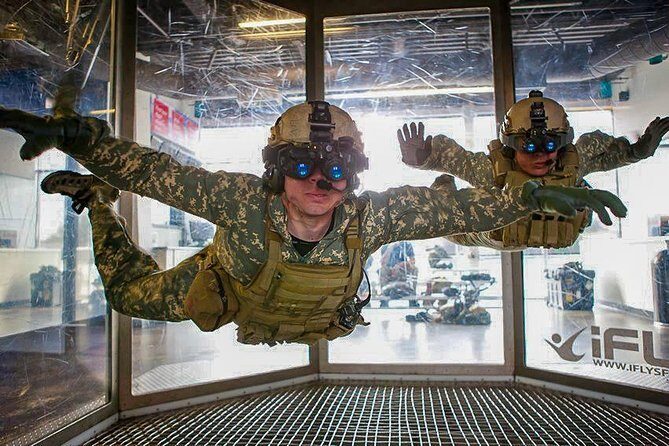
You’ll train and fly in the facility’s gear, including a flight suit you wear over your clothes. That’s practical because you’re not buying anything special for one afternoon. Still, your outfit choice matters for comfort and control.
Wear well-fitting, lace-up sneakers or running shoes and comfortable clothes. The flight suit goes on top, so avoid bulky layers that restrict your movement. If you have long hair, braid it and keep it in a low bun so it doesn’t float around in the airflow.
You’ll also need to remove items that could flap or loosen: jewelry like earrings, necklaces, bracelets, watches, rings, and hair accessories. Empty your pockets too. Lockers are available, but it’s smart to leave valuables at home so you’re not stressed about what goes where.
If you wear glasses, you can bring them. The facility has goggles that can fit over eyeglasses, which is a relief for anyone who usually can’t see well without them.
The Training Session That Makes Your First Flight Click
Training comes first, and that’s not just a formality. The goal is to teach you the flying position that lets the wind do its job. You’ll learn body positioning and practice the basics before you enter the chamber.
This matters because the tunnel is stable, but your body needs to be stable too. Your instructor will work with you on how to hold your body so you float smoothly. The more you understand the target position, the less you fight the airflow.
The instructor is with you the entire time in the chamber. That one-on-one guidance is a huge value because you’re not “learning by panic.” When you’re correcting your position mid-flight, having a coach right there reduces the mental load.
Your Two 60-Second Solo Flights: Focus, Timing, and Coaching
The signature part of this package is two flights for one person, with each flight lasting about 60 seconds. You’ll get your solo run one at a time while your small group watches from the observation area.
Those two separate flights are what make the experience feel complete. One flight teaches you what the tunnel feels like. The second flight lets you apply that training, improve your stability, and get a more satisfying result.
You’ll also receive a certificate of flight achievement at the end. I like this because it turns a quick adrenaline moment into something you can keep. It’s a nice souvenir for proving to yourself you did the thing.
On the practical side, the schedule is usually tight, but it can slip if a session runs behind. If your start time is important, build buffer time before and after. A long wait is not the norm, but it can happen on busy days.





The Optional High Flight Add-On (and When It’s Worth It)
Some people choose an optional higher flying experience after their initial session. From what I’ve seen this add-on is appealing when you want more airtime style or more intensity after you’ve learned the basics.
It can be worth it if you’re the type who wants a bigger payoff, especially since you already have coaching built in. But if this is your first tunnel flight and you’re mainly aiming to learn safely and enjoy the moment, the standard two sessions may be plenty.
Either way, ask your instructor or staff about what changes during the higher option so you know what to expect. The tunnel experience is consistent, but your comfort level and goals should drive the choice.
Safety Rules That Matter (and Why They Exist)
Safety here isn’t a slogan. It’s built into the design and the process: the wind tunnel provides a controlled environment, and certified instructors guide you while you fly.
Still, there are clear restrictions you need to respect. You won’t be able to fly if you have previous neck, back, heart, shoulder dislocations, or if you’re pregnant. A hard cast is also a no-go. These aren’t “maybe.” They’re hard safety limits.
Weight rules are also important. The facility requires you to weigh under 300 lbs. For those between 260 and 300 lbs, additional evaluation by local staff is required, and they may not be able to accommodate every flyer in that range. That means check before you plan your day around it.
If you have physical or cognitive challenges and want to try the experience, contact the location to request a certified instructor to guide all abilities flyers. That’s a practical step because it signals the facility to plan your session appropriately.
Minimum age is 3 years. For kids under 18, a parent or guardian must sign the waiver. There’s no upper age limit listed, which is good news for multigenerational trips.
Price and Value: What $102.96 Buys You in Real Terms
At about $102.96 per person, you’re paying for more than access. You’re paying for instruction, gear, and two actual solo flight attempts in a controlled wind environment. That package structure is the main reason the value feels fair.
Here’s what’s included:
- Two flights for one person
- Training and the use of all gear
- One-on-one guidance from a certified flight instructor
- A flight achievement certificate
- Taxes, fees, handling charges
What’s not included:
- Hotel pickup and drop-off
- Food and drinks
So your real cost picture is mostly about whether you need to travel to Lone Tree and how you’ll handle meals. Since iFLY doesn’t provide food here, I suggest planning a simple pre- or post-flight snack strategy near Park Meadows so you’re not hungry while you’re waiting.
Also consider the “do it once” trap. This experience avoids that by giving you two flights. If you’re spending time and money to try something new, two attempts plus coaching is a better deal than one trial run.
Making the Most of Your Time: Simple Arrival Tips
You’ll need to check in and get suited up, so arrive on time. The guidance is to arrive about 10–15 minutes early so your experience starts promptly. If you show up late, your flight schedule can be affected, and that’s when stress shows up.
A smart trick: decide what you’ll do with your phone and personal items. You’ll need to lock up items, and you don’t want to scramble mid-process. Some people like taking a few shots on their phone before entering the chamber, so if that matters to you, do that early.
Also, wear your best practical clothes. Sneakers with good grip help, especially when you’re learning how to move around in the gear area. Comfortable pants and a shirt without a collar are usually a good bet.
Who Should Book This Denver Wind-Tunnel Flight
This is a great fit if you want an adrenaline-like experience without the plane, the jump, or the technical fear of making mistakes alone. It’s also ideal if you’re traveling in a group of mixed ages and fitness levels because there’s a clear training ramp.
If you’re looking for a fun date activity, the two solo flights can feel like a shared mission: you both get coached, you both fly, and you still have a predictable schedule. Couples often like that it feels personal even though you’re in a small group session.
If you’re visiting Denver and want a plan that doesn’t depend on the weather, this is a strong indoor option. Colorado can change quickly, and the wind tunnel keeps the day on track.
But you should skip it if you fall into the listed safety restrictions, including pregnancy or certain injury histories. And if you’re close to the weight limit range, confirm eligibility early so your trip plan stays intact.
Bottom Line: Should You Book iFLY Denver?
If you want a guided, first-timer-friendly “free-fall simulation” with two solo flights and an instructor who stays with you, this is an easy yes. The included training, gear, certificate, and the fact that you get a second chance to improve your flight make the price feel like a real package deal.
Book it if you’ll treat it like a learning experience, not a freestyle stunt. Show up early, follow staff directions, wear the right shoes, and let the instructor cues do their job. If that sounds like your style, you’ll likely leave with that I can’t believe that felt so real feeling, plus proof you did it.
FAQ
What is the location for the Denver indoor wind-tunnel flight?
The meeting point is 9230 Park Meadows Dr, Lone Tree, CO 80124, USA, and the activity ends back at the meeting point.
How long does the experience take?
It’s approximately 1 hour 15 minutes, and the full first-time flyer experience is listed at about 1 hour 30 minutes from start to finish.
Are two flights included?
Yes. The package includes two flights for one person, and each flight lasts about 60 seconds.
Do I need any experience?
No experience is necessary. First-time flyers take a training session before flying.
How does the training work?
You’ll take a training class where you learn flying position basics and do pre-flight practice before entering the flight chamber.
Is the experience scary or does it feel like falling?
There is no jumping. You float on a column of air, and there is no sensation of falling.
What should I wear?
Wear well-fitting, lace-up sneakers or running shoes and comfortable clothes. The flight suit is worn over your clothes.
Are there age limits?
Minimum age is 3 years. Children under 18 must have a parent or guardian sign their waiver.
Is there a weight limit?
Participants must weigh less than 300 lbs. Flyers who weigh between 260–300 lbs require additional evaluation by local staff.
Can friends or family watch without participating?
Yes. If someone chooses to watch, they can accompany you through your experience and view from the observation area.
Can I reschedule my reservation after booking?
If you need to reschedule, you must call the location directly. Modifications to reservation dates and times cannot be done any other way.