REVIEW · DENVER
Rockies to the Red Rocks Train Denver to Moab SilverLeaf
Book on Viator →Operated by Rocky Mountaineer · Bookable on Viator
Train windows don’t lie. This Rocky Mountaineer route strings together the Colorado River canyons and Utah’s red-rock icons in a way cars just can’t match. You get to watch big elevation changes happen right in front of you, with stops and stories paced so you actually enjoy the ride.
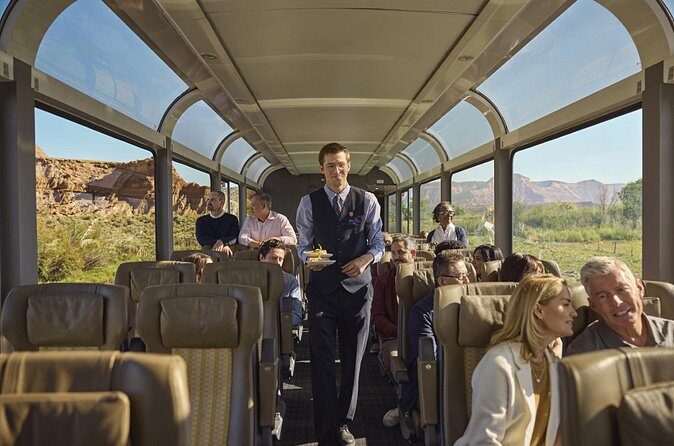
Two things I especially like are the SilverLeaf service at your seat and the way the onboard narration brings the scenery into focus. You’ll be served meals and beverages right where you sit, plus Hosts who share route history and how the rail line threads through tough terrain. If you choose SilverLeaf Plus, you also get lounge car space and a small outdoor viewing area for more hands-on viewing.
One consideration: this is a premium, fixed-timing experience, and the price is built around all the included meals, service, and the overnight hotel stop. If you’re the kind of traveler who likes to hop out for quick walks at every landmark, you’ll need to be okay with the fact that some sights are passed through rather than visited.
In This Review
- Key highlights worth planning for
- SilverLeaf on Rocky Mountaineer: the comfort and service that matter
- Day 1: RiNo and the Big 10 Curve before the rail turns serious
- The Continental Divide moment in the Moffat Tunnel
- Gore Canyon and the “pass-through” reality
- Day 1 evening: Glenwood Springs Hot Springs time
- Day 2 morning: hot breakfast and the route turns southwest
- Grand Junction to Fruita: where the route makes connections
- Painted Canyon and the rafting corridor feeling
- Cisco and Thompson Springs: the railroad past in red-rock country
- Approaching Moab: Arches-area scenery and the La Sal Mountains
- Price and value: why this costs what it costs
- Who this trip fits best (and who should skip it)
- Should you book Rockies to the Red Rocks Denver to Moab?
- FAQ
- What service level is included on this journey?
- Is there an upgrade option for more onboard space?
- Where is the overnight stay during the trip?
- What meal is included on day one and day two?
- What time does the train start?
- Is this experience refundable if plans change?
Key highlights worth planning for
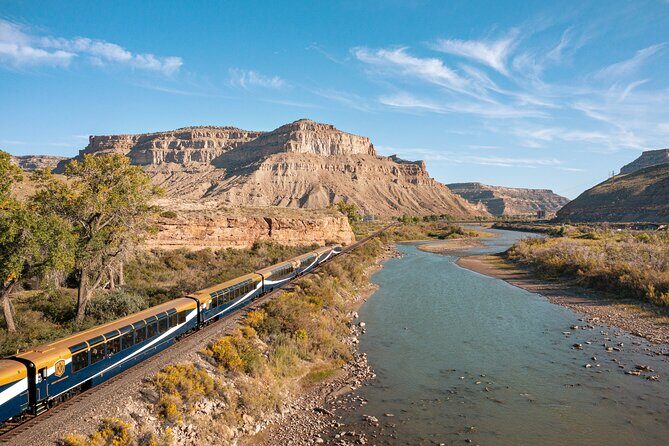
- Dome-window viewing that keeps the action in front of you, not off to the side
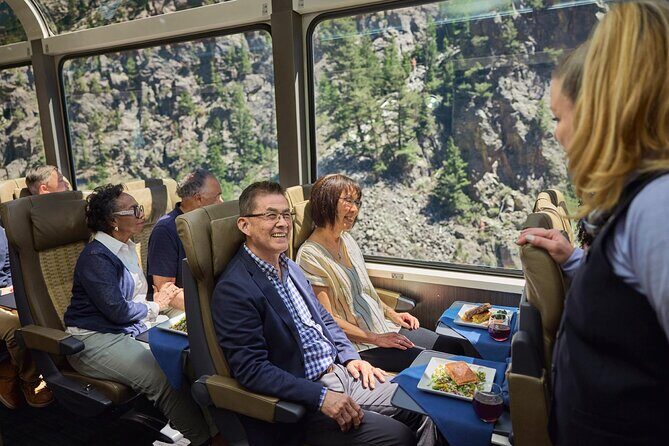
- SilverLeaf service with meals and drinks delivered to your seat
- A Glenwood Springs overnight that gives you a real break in the middle of the route
- Big engineering moments like the Moffat Tunnel crossing the Continental Divide
- Red-rock approach to Moab, with Arches-area scenery as you near town
SilverLeaf on Rocky Mountaineer: the comfort and service that matter
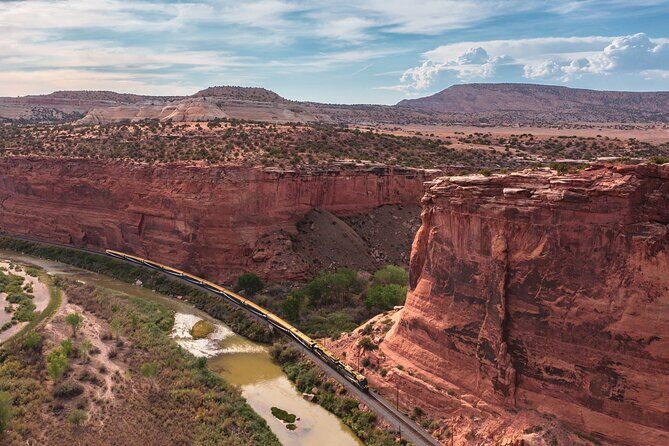
This isn’t a bus tour with a meal stop. You’re on a dedicated rail journey designed around long stretches of viewing time, with food and drinks moving to you instead of the other way around. That sounds small until you’re sitting in a great seat for hours, watching canyon walls slide past without the usual time-wasting.
With SilverLeaf service (the standard here), meals and beverages come to your seat, and onboard Hosts handle the storytelling and day-to-day care. You also get complimentary baggage transfers to and from your Glenwood Springs hotel, which is a huge deal when you’d rather not lug bags across town or into a rental-car shuffle.
If you upgrade to SilverLeaf Plus, you’ll get access to an onboard lounge car with extra space to relax. The small outdoor viewing area is also a nice bonus if you want to step out and take more direct photos or just feel the air for a minute. Based on what I’d call the overall passenger “pattern” on this route, the onboard experience is a big part of why the satisfaction stays so high.
Other Red Rocks tours we've reviewed in Denver
Day 1: RiNo and the Big 10 Curve before the rail turns serious
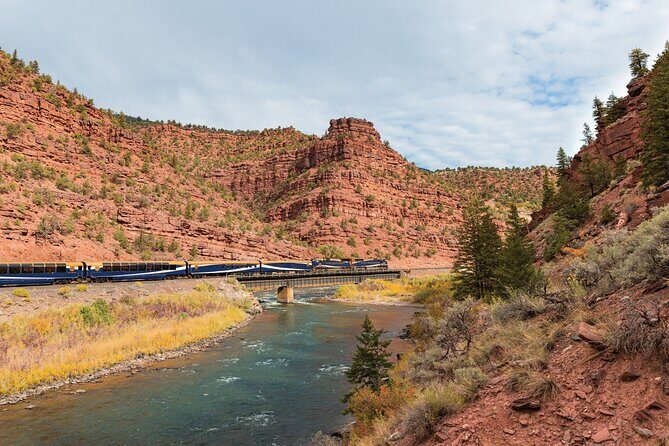
You start with a morning boarding in Denver, but the day begins earlier than you might expect. There’s a motorcoach transfer that takes you through the River North Art District, known as RiNo, a creative area packed with colorful street art and local businesses. It’s a quick, easy way to get oriented in Colorado without needing extra planning time.
Then you move into the rail portion where the drive-for-view advantage becomes obvious. One standout moment is the Big 10 Curve, a tight 10-degree-radius curve designed to keep the grade gentle enough for rail travel. Even if you don’t care about the engineering, you’ll feel what that means: the train keeps climbing in a steady rhythm while you watch the terrain unfold.
As you head toward the Boulder area, you get brief glimpses of the Flatirons where the Rocky Mountains meet the Plains. You also pass the Gross Reservoir Dam as the train slowly gains elevation. Those are quick views, but they help you understand the route’s theme: Colorado changes fast, and rail makes that change look dramatic.
The Continental Divide moment in the Moffat Tunnel
One of the most memorable-feeling sections is the run through the Moffat Tunnel, a 6.2-mile crossing through mountainous terrain right as you cross the Continental Divide. The tunnel part is brief, but the lead-in and the exit tend to stick because you go from enclosed dark to open mountain air.
Right after you exit, you look out toward the mountain resort town of Winter Park. Then the route ties back to a single powerful thread: the Colorado River. You follow it for long stretches, and that matters because the river’s canyons are what create so much of the rugged scenery people come for.
There are also cues along the way that tell you you’re in the active whitewater country. The river is known for rapids and rafters, so you might catch evidence of the outdoor adventure culture moving alongside the rail line. It’s a fun contrast: people fighting rapids outside while you glide past inside.
Gore Canyon and the “pass-through” reality
A major canyon highlight is Gore Canyon, with towering cliffs dropping about 1,000 feet. The route notes two sections, upper and lower, so the view changes as you progress, even though the train doesn’t stop. This is one of those times when rail-only pacing shines: you watch the geometry of the canyon develop instead of trying to scramble for the best angle.
The day also includes an additional rugged canyon reach that the train passes through without stopping, described as one of the most scenic natural features in the United States. If you’re the type who likes to get out and stretch, plan on keeping your viewing time on board. That’s not a downside if you came for the uninterrupted scenery, but it’s worth knowing upfront.
You’ll also pass Byers Canyon, plus other canyon stretches along the Colorado River. There’s wildlife potential in the wider region too, and it’s the kind of place where a quick scan out the window can pay off. Bring patience: this isn’t a quick-hit checklist; it’s a long visual story.
Day 1 evening: Glenwood Springs Hot Springs time
By evening you arrive in Glenwood Springs, where the next chapter starts. After disembarking, you can either settle into your hotel room or head to the Glenwood Springs Hot Springs area for a soak.
This overnight matters more than people expect. Two days is short, and the midday between train segments gives you a buffer so you’re not running on fumes. It also changes how you experience the route: you’ll view the next day’s canyon country with fresher eyes instead of rushing through it in one continuous push.
Glenwood Springs is the classic “spa town” stop, which helps explain why the route includes it as the midpoint destination. You’re not stuck with only a generic hotel night; you get a town people specifically go to for relaxation.
Other scenic train rides from Denver

Day 2 morning: hot breakfast and the route turns southwest
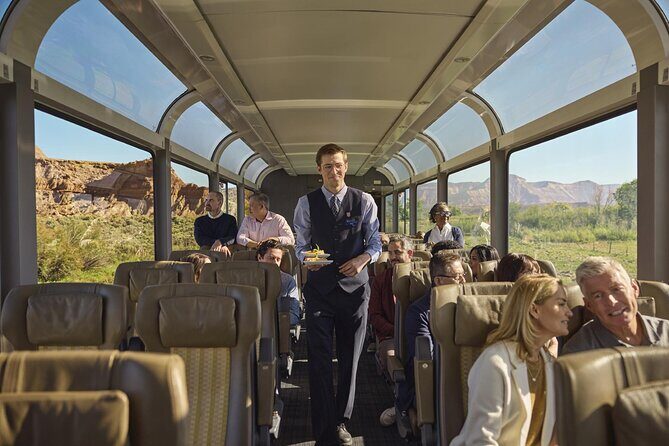
On day two, you depart Glenwood Springs in the morning with a two-course hot breakfast. Then the train heads southwest past mountain vistas and toward desert cliffs, a shift that feels almost like you crossed into a new planet. Again, the rail-only advantage is that you can watch that transition without switching gears, driving, or stopping to reposition.
Early on, you pass the town of New Castle, with the Colorado River flowing through. The area is known for trout fishing and rafting and kayaking, which gives the river a human layer beyond scenery. You’ll also see more canyon and creek country as the route continues.
A highlight here is De Beque Canyon, described as a 15-mile narrow canyon with stair-step cliffs of sedimentary rock layers. That “layer cake” look is the kind of geology that’s hard to truly appreciate from a speeding highway. On a train, you can actually slow down visually, even if you’re still moving quickly through space.
Grand Junction to Fruita: where the route makes connections
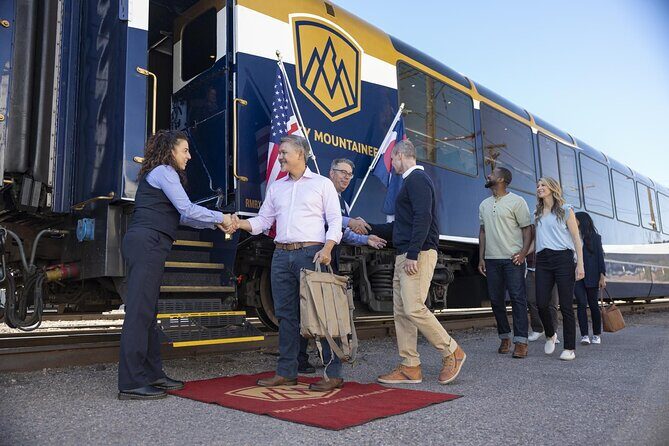
As you pass Grand Junction, you’re at a confluence point where the Gunnison River meets the Grand River. The route notes that the Colorado River was then called the Grand River, which is a handy reminder that place names evolve over time. It’s the sort of detail a good Host can connect to what you’re seeing, and it helps the drive feel less like random scenery.
You also pass Fruita, known for dinosaur fossils. It’s also famous for the story of Mike the Headless Chicken, plus a May festival tied to that legend. These are the kinds of local bits that keep the second day from feeling like only geology and rock walls.
Painted Canyon and the rafting corridor feeling
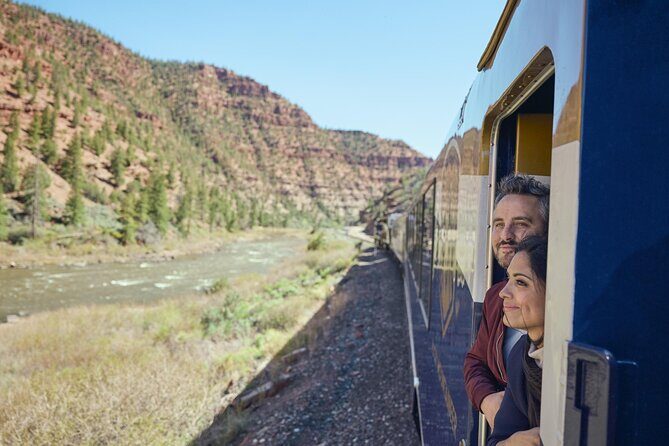
The route continues through a 25-mile canyon on the Colorado River, with red sandstone lining the walls. It’s popular for river rafting and described as otherwise largely inaccessible. Translation: this section is where the river carved its work, but roads and access don’t make it easy for most people to reach.
When you’re on rail, you become a spectator of a natural corridor that’s usually experienced from a raft or from limited viewpoints. Even if you’ve seen canyon photos before, the scale tends to land harder when you’re watching from a moving train with a steady, long view.
Cisco and Thompson Springs: the railroad past in red-rock country
As you approach Moab, you pass through Cisco, Utah, once a thriving community and a watering stop for steam engines on the Denver and Rio Grande Western Railroad. The route also notes that the construction of Interstate 70 helped shrink that kind of rail-centered life, which is a good reality check.
Then you pass Thompson Springs, Utah, also with only a few buildings left. It’s located in Thompson Canyon, and the quiet you see out the window can feel like the landscape has “moved on,” even though the canyon still holds the same shape.
These stops are brief, but they add meaning. You’re not just heading to red rocks; you’re retracing how rail lines shaped communities and how they changed when highways took over.
Approaching Moab: Arches-area scenery and the La Sal Mountains
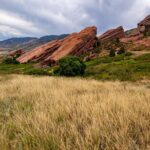
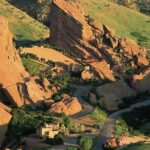
Breathtaking red rock formations start to show as you near Moab, with Arches National Park mentioned in the approach window. In the distance you can see the La Sal Mountains, and the route notes they’re the second-highest mountain range in Utah.
This is a key moment for planning your expectations. If your main goal is seeing famous Utah rock formations, you’ll get that payoff as the approach ramps up. You’re arriving with the right “story” already in your head thanks to the earlier canyon sections, so Arches-area features don’t feel random.
When you reach Moab, it’s described as the gateway to Utah’s Mighty 5 national parks: Arches, Bryce Canyon, Canyonlands, Capitol Reef, and Zion. Even if you don’t plan to visit all of them, Moab is a solid base, and it’s the place where people start turning those names into real day plans.
Price and value: why this costs what it costs
At $1,723 per person for a two-day, rail-only experience, the price is not trying to be a bargain. It’s paying for a specific kind of travel: onboard Hosts, seat-delivered meals and beverages, complimentary baggage handling, and a prime rail route that highlights canyon country from the best angles.
Here’s how I judge value for a trip like this: you’re buying time that you don’t spend driving, finding parking, or doing the usual “arrive, rush, leave” cycle. You’re also buying comfort that stays consistent. The train stays clean and the cars are described as comfortable, with dome windows that help you frame photos.
If you want your trip to feel like a guided rail experience rather than a DIY road trip with snacks, the cost begins to make sense. The fixed schedule also means fewer decisions for you. You choose the seat level, and then you let the route do the work.
If you’re very price-sensitive or you love stopping at lots of small pull-offs, you might prefer renting a car and spending extra days. But if you want two days that feel like the West in motion, the pricing is closer to “pay for the ride” than “pay for the view.”
Who this trip fits best (and who should skip it)
This works best if you want a rail-forward vacation: sitting, watching, eating well, and letting the scenery come to you. It’s also ideal if you like the idea of the Continental Divide and canyon corridors without the fatigue of long drives.
It’s a good match for couples and first-time rail riders, too. The group size is capped at 15 travelers, so it feels like a small experience rather than a huge crowd shuffle.
You might consider skipping it if you need tons of on-the-ground time at each attraction. Some of the biggest canyon segments are passed through without stopping, because the whole point is to keep you in the seat for the continuous best viewing angles.
Should you book Rockies to the Red Rocks Denver to Moab?
I think you should book if your goal is a premium two-day run that turns the Colorado River canyons into a front-row show, then hands you Moab with serious red-rock energy. I’d also book it if you value onboard service enough to treat meals and storytelling as part of the experience, not a small extra.
Hold off if you’re planning a trip built around frequent stops, hiking every day, or flexible detours. This route is designed to move and show you the best rail views, so it rewards the people who like that style.
If you go, plan on packing for comfort for long seat time, bring a camera you can use through the windows, and set your expectations: you’re not touring every stop on the ground. You’re riding the line that shows you the canyon country the way rail is meant to.
FAQ
What service level is included on this journey?
SilverLeaf service is included, with meals and beverages brought right to your seat, friendly Hosts, and complimentary baggage transfers.
Is there an upgrade option for more onboard space?
Yes. You can enhance your onboard experience with SilverLeaf Plus, which provides exclusive access to the lounge car and a small outdoor viewing area.
Where is the overnight stay during the trip?
The trip includes one night accommodation in the midpoint destination: Glenwood Springs, Colorado.
What meal is included on day one and day two?
Lunch is included. Day two includes a two-course hot breakfast.
What time does the train start?
The start time is 8:30 am.
Is this experience refundable if plans change?
No. It is non-refundable and cannot be changed for any reason.