REVIEW · DENVER
Rockies to the Red Rocks Train – Denver to Moab – SilverLeaf Plus
Book on Viator →Operated by Rocky Mountaineer · Bookable on Viator
Two days on rails, and the West changes fast. This Denver to Moab journey on Rocky Mountaineer’s SilverLeaf Plus takes you where most cars can’t—over the Continental Divide, along the Colorado River, then into red-rock country—with meals served right to your seat.
I love the service level: onboard Hosts, storytelling, and food that actually feels thoughtfully done instead of mass-produced. I also love that SilverLeaf Plus gives you a quieter spot to hang out in the lounge car, plus premium alcoholic drinks and signature cocktails. One thing to consider: you won’t get to hop off and wander during every headline view, including places the train simply passes through—so this is best for people who want to watch, not roam.
In This Review
- Key highlights worth planning for
- Why this train route beats a drive between Denver and Moab
- SilverLeaf Plus comfort: lounge car, cocktails, and seat-service meals
- Day 1 in Colorado: Denver to Glenwood Springs, with art stops and canyon reveals
- RiNo and the ride-on notes you can actually use
- The Big 10 Curve and the Continental Divide setup
- Boulder, Flatirons, and the reservoir that feeds the plains
- Following the Colorado River: rapids, Byers Canyon, and Gore Canyon
- Glenwood Springs: your overnight reset
- Day 2 from Glenwood to Moab: river towns, dinosaur fossils, and red sandstone entrances
- New Castle, Parachute Creek, and the wildlife factor
- De Beque Canyon: stair-step cliffs and tight canyon motion
- Grand Junction and Fruita: where river meets town character
- Painted Canyon and the Colorado River section that stays out of reach
- Historic Utah stops: Cisco and Thompson Springs
- Approaching Moab: Arches views and the La Sal Mountains
- Moab arrival: the gateway feeling, without the rush
- Price and value: what $2,327 buys you, and what it doesn’t
- Packing, luggage limits, and what to expect onboard
- Glenwood Springs lodging: clean, comfortable, and assigned before you arrive
- Should you book this Denver to Moab rail trip in SilverLeaf Plus?
- FAQ
- How long is the Denver to Moab rail journey?
- What time does the trip start?
- What does SilverLeaf Plus include beyond the main rail experience?
- What meals are included?
- Is WiFi available onboard?
- Where do I stay overnight during the trip?
- What are the luggage limits on Rocky Mountaineer?
- Does the train stop at Gore Canyon?
- Where do we arrive in Moab?
Key highlights worth planning for
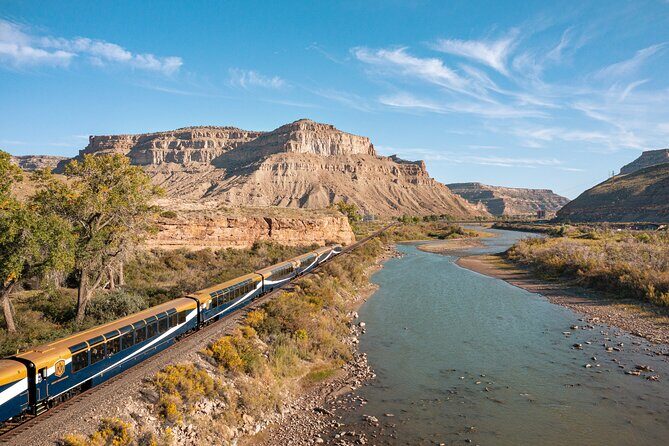
- SilverLeaf Plus lounge car with extra room and a small outdoor viewing area
- Meals and drinks served to your seat, with locally inspired menus and steady snack flow
- Big scenery days that follow the Colorado River canyon system all the way toward Moab
- Continental Divide crossing via the 6.2-mile Moffat Tunnel
- Glenwood Springs overnight in a moderate, clean, comfortable hotel with a real pause from the train
- Max 15 travelers, so the vibe stays calm instead of crowded
Why this train route beats a drive between Denver and Moab
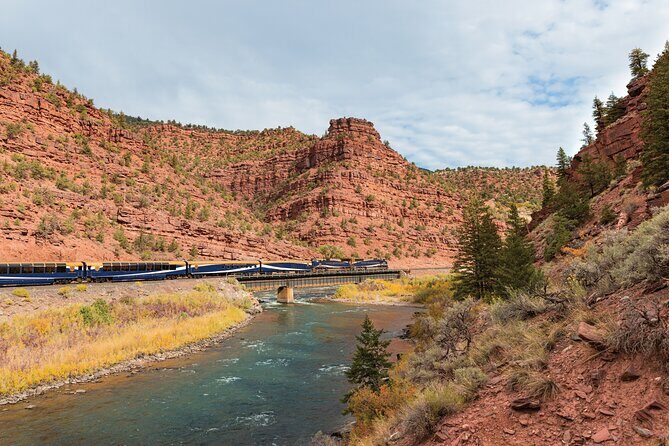
If you’ve tried to do this region by rental car, you know the problem: you’re always either driving or parking, and you miss the slow reveal of the canyons and desert edges. This trip flips that. You sit, you eat, and you watch the West build itself—mile after mile of changing color and rock forms—without stopping to navigate.
You also get a different rhythm with the train-only approach. When you’re in motion, the story told by the landscape becomes more obvious: the river corridor, the tight canyon sections, and then the sudden shift toward red sandstone. It’s the kind of route where you catch details you’d never think to pull over for.
Other Red Rocks tours we've reviewed in Denver
SilverLeaf Plus comfort: lounge car, cocktails, and seat-service meals
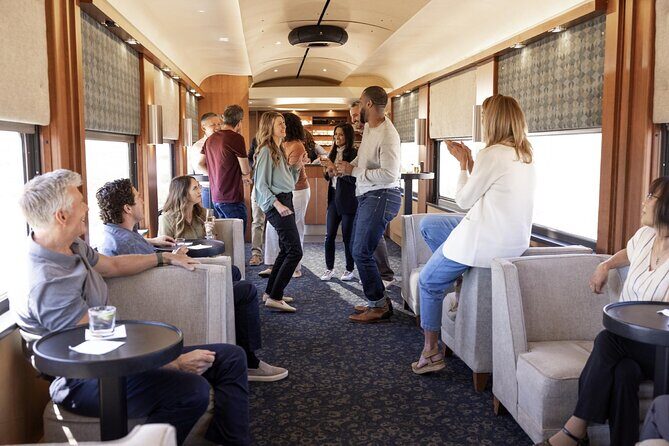
The “Plus” part isn’t just a marketing label. It’s your real day-to-day comfort upgrade.
First, you get exclusive access to the lounge car. That matters because the main coach space is still fine, but you’ll want options. The lounge car gives you additional room to relax, and there’s a small outdoor viewing area when you want a change of view without having to fight your way to the best windows.
Second, SilverLeaf Plus includes premium alcoholic beverages and signature cocktails. Even if you don’t go heavy, it changes the feel of the day. Drinks are part of the experience rather than an afterthought, and you’re not scrambling around for snacks or vendors.
And third, the food plan is designed around rail travel. Breakfast and lunch on Day 1 are built from a locally inspired menu, with snacks and drinks available throughout the day. Day 2 includes a two-course hot breakfast with locally sourced ingredients. Meals and beverages are brought right to your seat, which is a big deal when the best views aren’t exactly waiting for you to stand up.
Day 1 in Colorado: Denver to Glenwood Springs, with art stops and canyon reveals
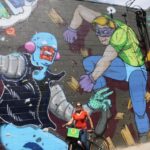
Day 1 starts in Denver, but you don’t just walk onto the train and disappear. Before boarding, you take a motorcoach transfer through the River North Art District, also known as RiNo. It’s known for creative businesses and colorful street art murals, and it’s a quick way to add personality before you go into scenery mode.
Then the train takes over, moving through engineering and geology highlights in a way that feels almost educational—without turning into a lecture.
RiNo and the ride-on notes you can actually use
That RiNo detour is short, but it’s smart. You get your “big city texture” moment, and then you’re out of Denver without feeling like you skipped the culture entirely.
The Big 10 Curve and the Continental Divide setup
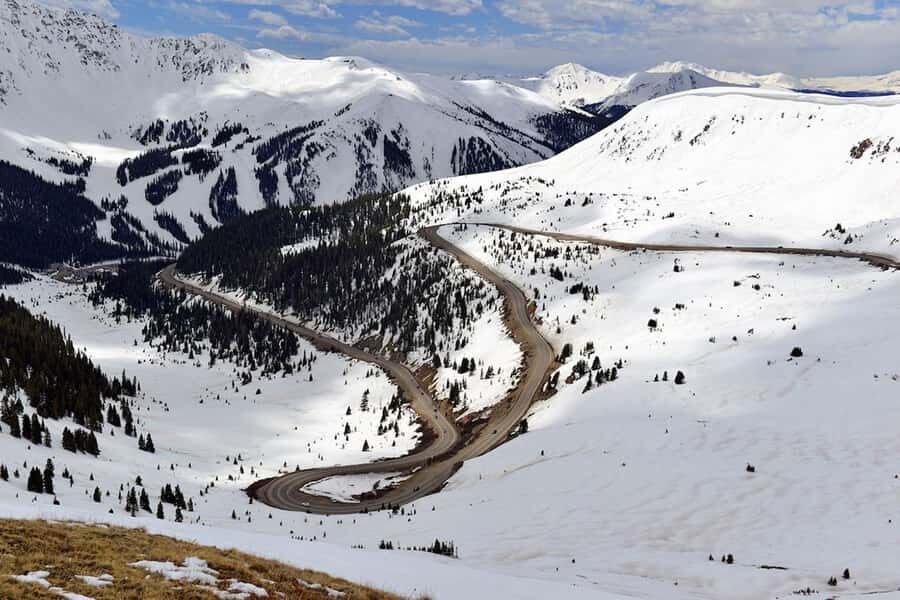
Early on, you pass the Big 10 Curve, described as a tight 10-degree radius bend. The point is practical: it adds mileage to help keep the grade friendly for rail travel. Translation for you: the ride stays smooth, and the scenery keeps rolling instead of feeling like a constant climb.
Not long after, you cross through the Moffat Tunnel, cutting through 6.2 miles of mountain terrain while you cross the Continental Divide. You don’t need to memorize the distance to appreciate it—being in a tunnel on a famous rail route gives you a clear sense of scale, especially when you pop out and the scenery opens again.
Other scenic train rides from Denver

Boulder, Flatirons, and the reservoir that feeds the plains
You’ll catch a view of the Flatirons area near Boulder—where the Rocky Mountains meet the plains. You also pass the Gross Reservoir Dam, which supplies water to Denver and supports agriculture across the Great Plains. It’s a neat reminder that what you’re seeing isn’t just scenery; it’s how the West works.
Following the Colorado River: rapids, Byers Canyon, and Gore Canyon
Much of Day 1 tracks along the Colorado River, known for dramatic canyons and whitewater rapids. You may even see rafters along the way. This is a fun contrast: the river is active and loud in places, while you watch from a calm, stable vantage.
You also pass Byers Canyon, another slice of rugged canyon scenery along the route. Then comes Gore Canyon, the dramatic highlight of the day—surrounded by cliffs that run over 1,000 feet tall. The route is described as having upper and lower Gore Canyon, with the train moving through but not stopping at one of the most scenic sections. If you love “walk-out-to-a-viewpoint” travel, that’s the one place you’ll want to adjust your expectations. This day is about watching from the rail windows, not getting out for photos on the ground.
Glenwood Springs: your overnight reset
By evening, you arrive in Glenwood Springs, a historic resort town and your midpoint overnight. Getting a real stop here is what keeps the whole two-day plan from feeling like a blur. You can disembark and settle into your hotel room, and if hot springs are your thing, you’ll have easy access to that kind of relaxation once you’re off the train.
You’re not planning full-day touring in Glenwood Springs—this is more of a reset button. But that reset matters when you’re doing one long scenic push on Day 1 and another on Day 2.
Day 2 from Glenwood to Moab: river towns, dinosaur fossils, and red sandstone entrances
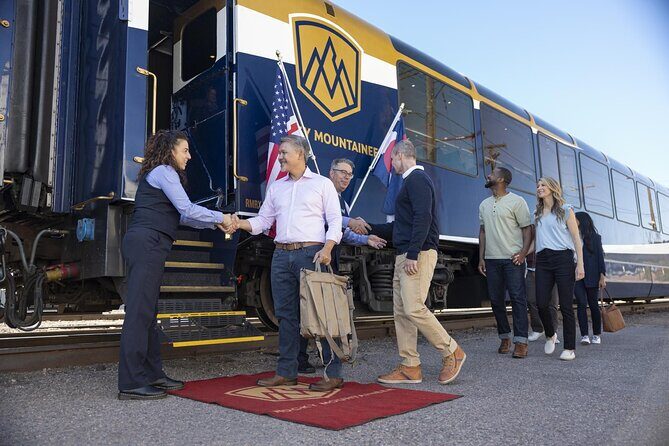
Day 2 starts with departure from Glenwood Springs and another onboard meal: that two-course hot breakfast with locally sourced ingredients. Then the train heads southwest past mountain vistas and desert cliffs, shifting your visual focus as the day progresses.
As you watch, you’ll notice the route gradually trading green mountain tones for sharper red and tan highlights. This is exactly why rail travel works so well here—you see the change gradually instead of arriving at one “sudden” desert moment.
New Castle, Parachute Creek, and the wildlife factor
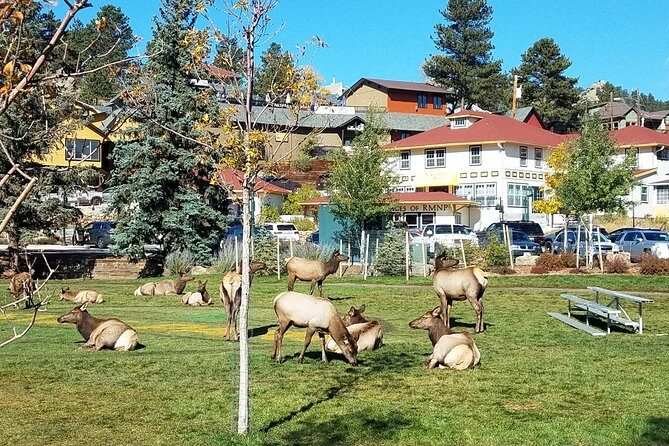
Shortly after leaving, you pass New Castle, where the Colorado River runs through town. It’s listed as a popular area for trout fishing, rafting, and kayaking—and the route also notes wildlife like deer, elk, and black bear. That wildlife part is just a reminder to look up from your food plate now and then. The train rhythm gives you repeated chances to spot motion along the banks and slopes.
De Beque Canyon: stair-step cliffs and tight canyon motion
You also pass Parachute Creek and Mount Logan. Then comes De Beque Canyon, described as a 15-mile narrow canyon with stair-step layers of sedimentary rock. Even without getting off the train, this kind of “layered geology” plays well with moving viewpoints. You can spot where erosion has cut clean lines through the rock.
Grand Junction and Fruita: where river meets town character
Passing Grand Junction, you’re near the confluence of the Gunnison River and the Grand River. Then the route continues through Fruita, known for dinosaur fossils, plus the famous local character Mike the Headless Chicken, along with a festival held every May in his name.
These are the kind of town notes that make rail travel feel grounded. You’re not just watching “nature”; you’re watching nature adjacent to real communities with names that have stuck around for a reason.
Painted Canyon and the Colorado River section that stays out of reach
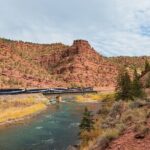
You’ll move through a 25-mile (40-kilometer) red sandstone canyon along the Colorado River, described as largely inaccessible except for rafting. This is another place where train viewing fits perfectly. If you’re used to roads controlling access, the idea that this stretch is otherwise hard to reach explains why the canyon looks so dramatic from the rail corridor.
Historic Utah stops: Cisco and Thompson Springs
As you approach the Moab area, you pass the small town of Cisco, Utah, which once served as a watering stop for Denver and Rio Grande Western Railroad steam engines. Later, Interstate 70 changed everything and helped end the area’s steam-era role.
A similar fate happened to Thompson Springs, with only a few buildings still in place. The train description points you to the surrounding Thompson Canyon area. You don’t get time to stop and wander here, but the names tell a story: rail technology changed, roads arrived, and these places faded into the background—while the scenery kept going.
Approaching Moab: Arches views and the La Sal Mountains
Near the end of the rail day, you’ll see the red rock formations approaching Moab and pass by Arches National Park. In the distance, you’ll spot the La Sal Mountains, noted as the second-highest mountain range in Utah. This is a nice finale because it signals that you’re not just reaching Moab; you’re entering the Mighty 5 national-park zone people fly in for.
Moab arrival: the gateway feeling, without the rush
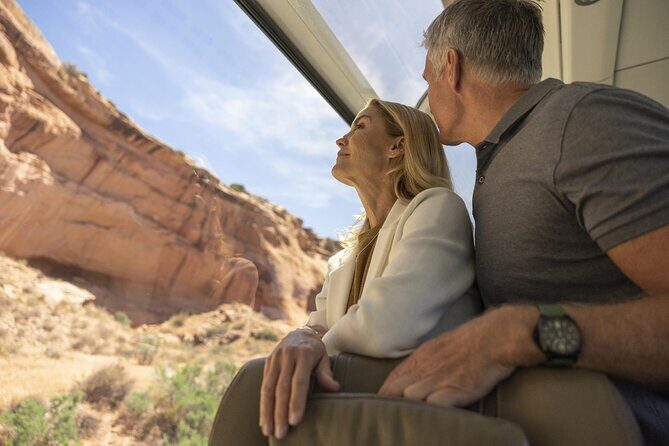
Moab is famous as the gateway to Utah’s Might 5 national parks: Arches, Bryce Canyon, Canyonlands, Capitol Reef, and Zion. The key here is that the train gets you to Moab without adding road fatigue. You’ll be fresh enough to plan your next steps, whether that’s focusing on one park or sampling a couple.
Your end point in Moab is the Rocky Mountaineer Moab Guest Centre at 59 S Main St, suite 3. For westbound Denver to Moab trips, the train will disembark at the Hoodoo Moab Hotel, so you’ll want to plan pickup and onward arrangements based on that.
Price and value: what $2,327 buys you, and what it doesn’t
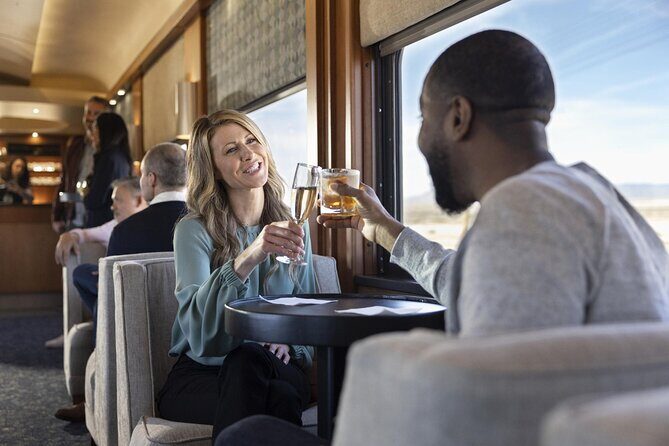
At $2,327 per person, this is a premium rail experience. The value comes from bundling the parts that usually cost you time and effort:
- Two days of rail-only viewing through high-impact terrain, including the Moffat Tunnel and major canyon sections
- Meals and drinks brought to your seat, so you’re not lining up or losing scenic time
- One night of lodging in Glenwood Springs with luggage handling
- SilverLeaf Plus upgrades like the lounge car access and premium alcoholic beverages and signature cocktails
- A small group size (max 15 travelers), which keeps the service atmosphere calmer
What it doesn’t include is equally important. Pre- and post-trip lodging isn’t included, and WiFi on board isn’t included. Also, you don’t get the flexibility of getting out whenever you want—this route is about viewing from the train, including sections that you pass through without stopping.
So I’d frame it like this: you’re paying for a low-stress way to see a big chunk of the West, with comfort and food built in. If you’re the type who wants to drive, stop, hike, and change plans all day long, a road itinerary might fit better. If you want one smooth, scenic show with good meals and a lounge upgrade, this is the kind of price that starts to make sense.
Packing, luggage limits, and what to expect onboard
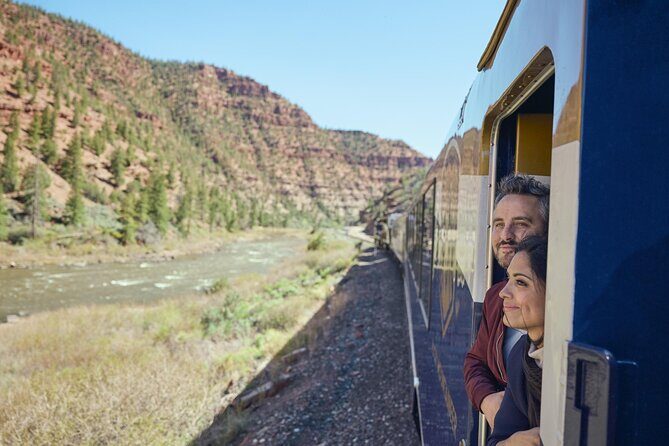
Rocky Mountaineer keeps luggage rules pretty clear. You’re allowed up to two pieces per person, with total weight not to exceed 30 kg / 60 lbs, and no single piece over 23 kg / 50 lbs.
Also, the trip includes complimentary luggage handling to and from your midpoint accommodations, which is a big stress reliever. You still need to travel light enough to meet those limits, but you won’t be personally hauling bags around your hotel stop.
One more practical point: your itinerary is seat-and-view focused, so pack items you can use during the day. Since WiFi isn’t part of the plan, plan on being present for the scenery and meals rather than expecting to work online.
Glenwood Springs lodging: clean, comfortable, and assigned before you arrive
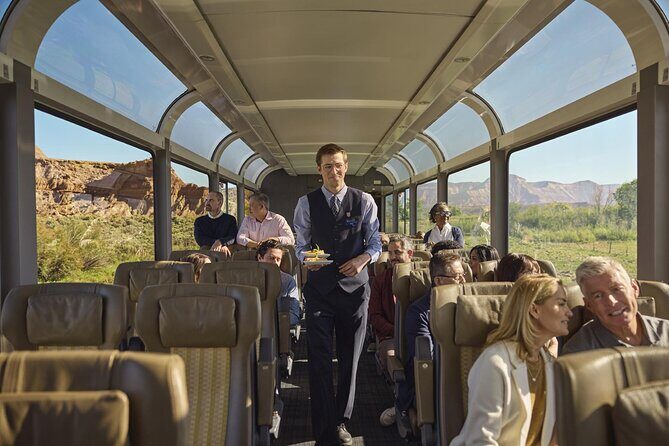
Your overnight destination is Glenwood Springs in a moderate, clean, comfortable accommodation with essential amenities and great service. Your room assignment is made a few days before departure, and it shows on your boarding pass when you check in to board the train.
This matters because it removes uncertainty. You aren’t hunting for a hotel at the last minute, and you’re not guessing what quality level to expect. Still, treat this overnight as part of the rail rhythm—not a destination-by-itself. Your big scenery days are the train portions.
Should you book this Denver to Moab rail trip in SilverLeaf Plus?
I think you should book if you want a low-effort, high-reward way to see canyon country and red rock country without white-knuckling a steering wheel. This is also a great fit if you care about comfort: the lounge car access, seat-served meals, premium drinks, and a small max group size make the whole two days feel thoughtfully arranged.
Skip it or consider another option if you’re traveling for lots of hikes or frequent stop-and-explore moments. Some of the most scenic places are train-passed rather than train-stopped, including at least one notable canyon section on Day 1. You’ll still see plenty, but you won’t treat this like a hop-on hop-off adventure.
FAQ
How long is the Denver to Moab rail journey?
The tour runs for about 2 days.
What time does the trip start?
The start time is 8:30 am.
What does SilverLeaf Plus include beyond the main rail experience?
SilverLeaf Plus includes exclusive access to a lounge car with extra space and a small outdoor viewing area, plus premium alcoholic beverages and signature cocktails.
What meals are included?
Lunch is included. Day 2 includes a two-course hot breakfast, and a breakfast option is listed as optional in the package details. Meals and beverages are brought right to your seat.
Is WiFi available onboard?
WiFi on board is not included.
Where do I stay overnight during the trip?
You stay one night in Glenwood Springs, Colorado.
What are the luggage limits on Rocky Mountaineer?
You can bring a maximum of two pieces per person. Total luggage weight per person must not exceed 30 kg or 60 lbs, and no single piece may weigh more than 23 kg or 50 lbs.
Does the train stop at Gore Canyon?
The train passes through Gore Canyon and does not stop there.
Where do we arrive in Moab?
The end point is the Rocky Mountaineer Moab Guest Centre at 59 S Main St suite 3, Moab. For westbound trips from Denver to Moab, the train disembarks at the Hoodoo Moab Hotel.